Scuba diving
In the north of the Marquesas archipelago, Nuku Hiva is a true marine sanctuary where nature shows itself in all its richness. With spectacular underwater landscapes and exceptional biodiversity, every dive is a unique experience.
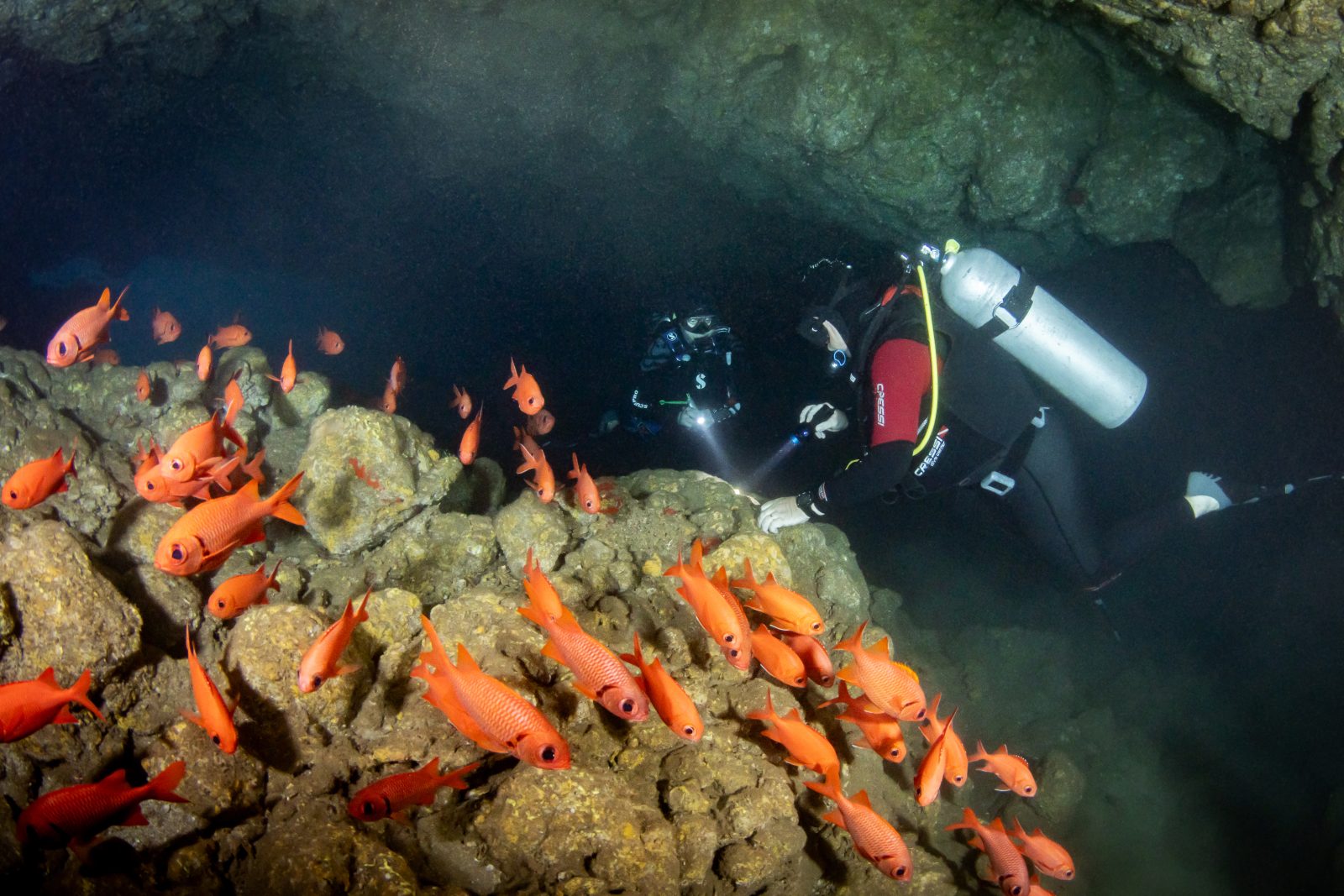
Nuku-Dive explores around fifteen dive sites on the south coast of the island, just 5 to 35 minutes away by boat. With no barrier reef, Nuku Hiva reveals a great variety of underwater landscapes: volcanic drop-offs, seamounts, rocky boulder fields and caves shaped by the geological activity of the archipelago. Most sites are accessible to all levels.
Water and seasons
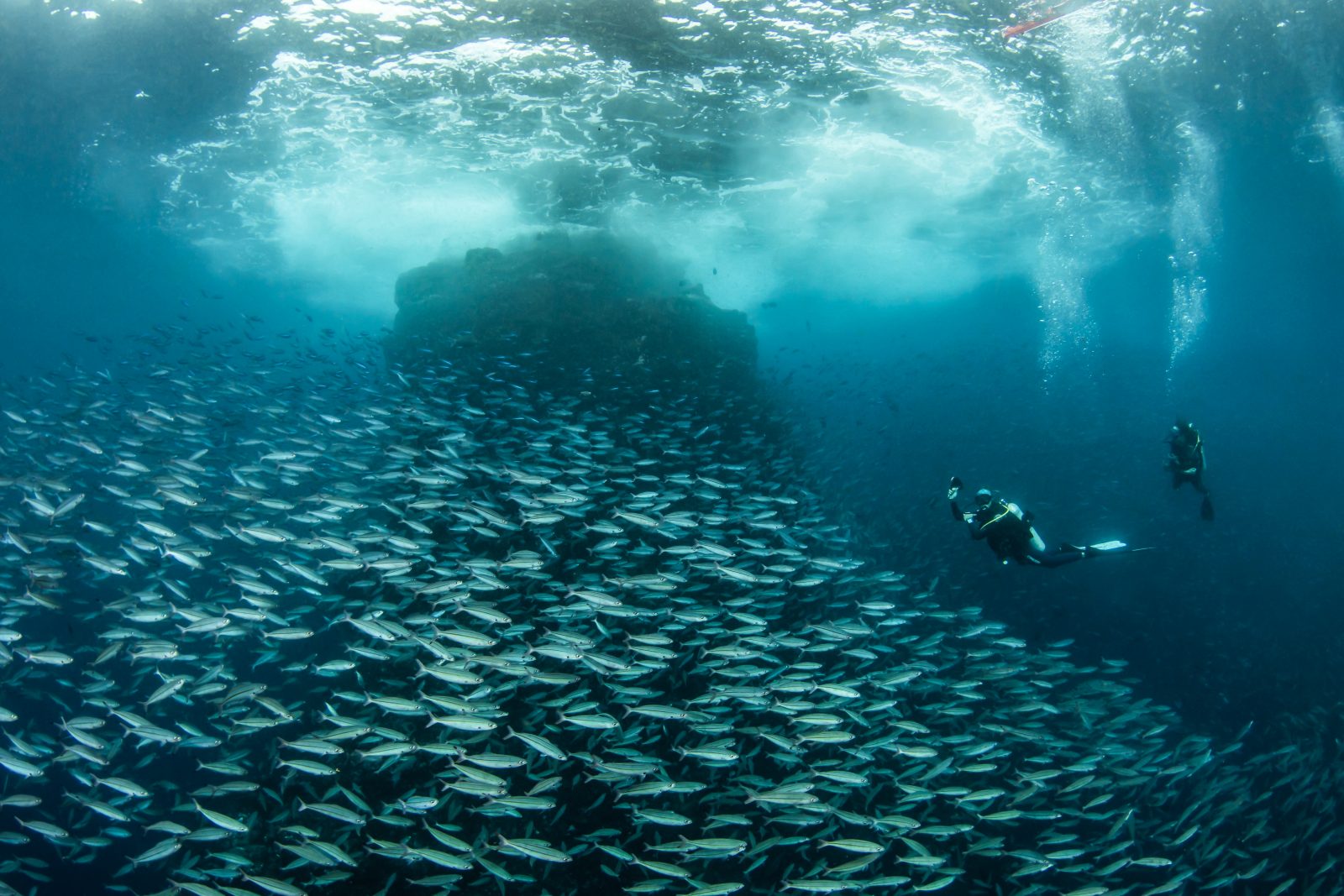
The water, around 28 °C all year round, offers visibility of 10 to 30 metres. Richer than in other parts of French Polynesia, it is particularly full of nutrients, which supports a great diversity of marine life.
Located in the north of French Polynesia and close to the equator, the Marquesas Islands do not have very marked seasons. However, from May to October, the south-east trade winds can be strong and the swell, mainly from the south, can make the sea rougher. It is therefore important to take precautions if you are prone to seasickness. From November to April, the prevailing winds and swell turn to the north, generally offering calmer boat rides.
Unique marine life
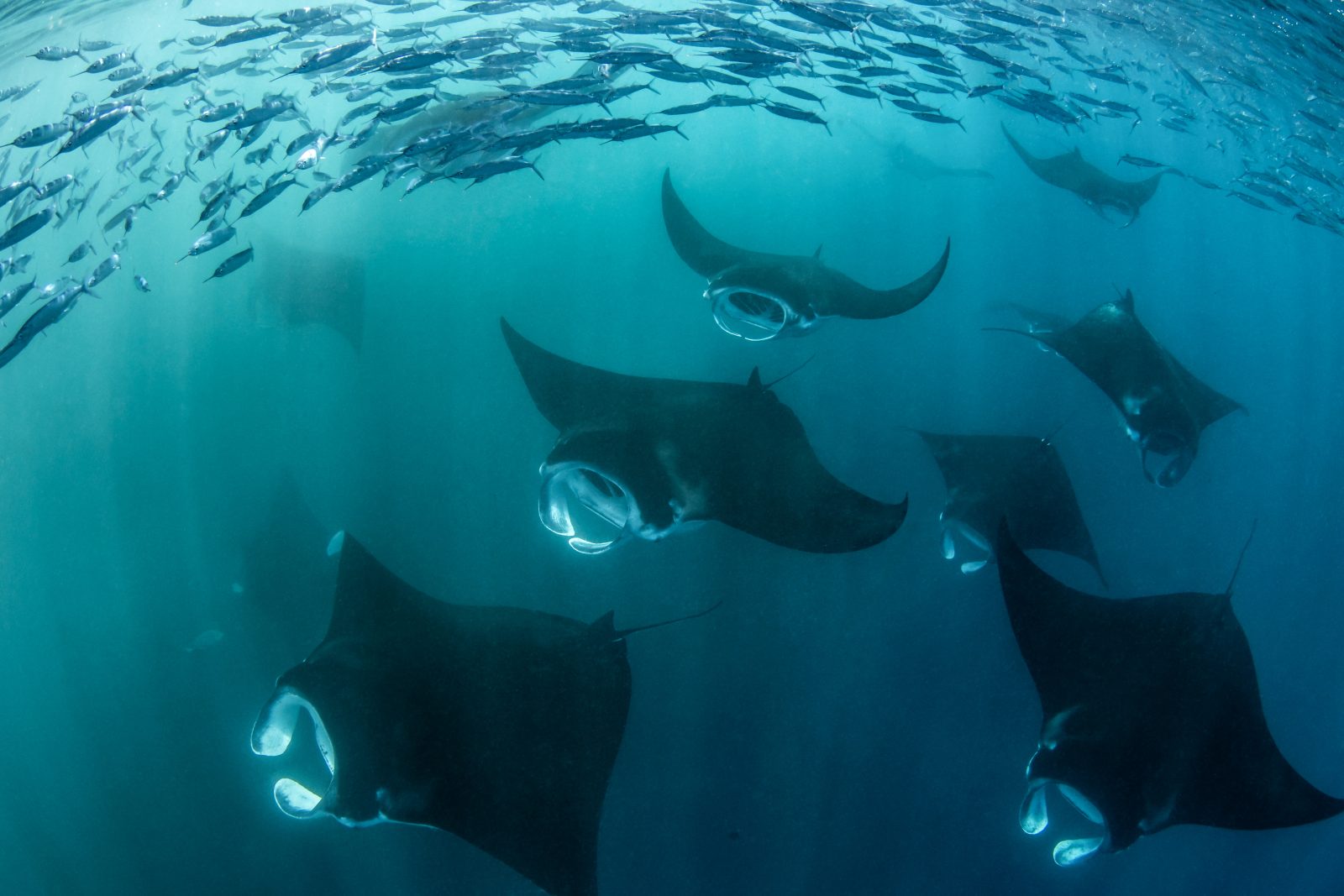
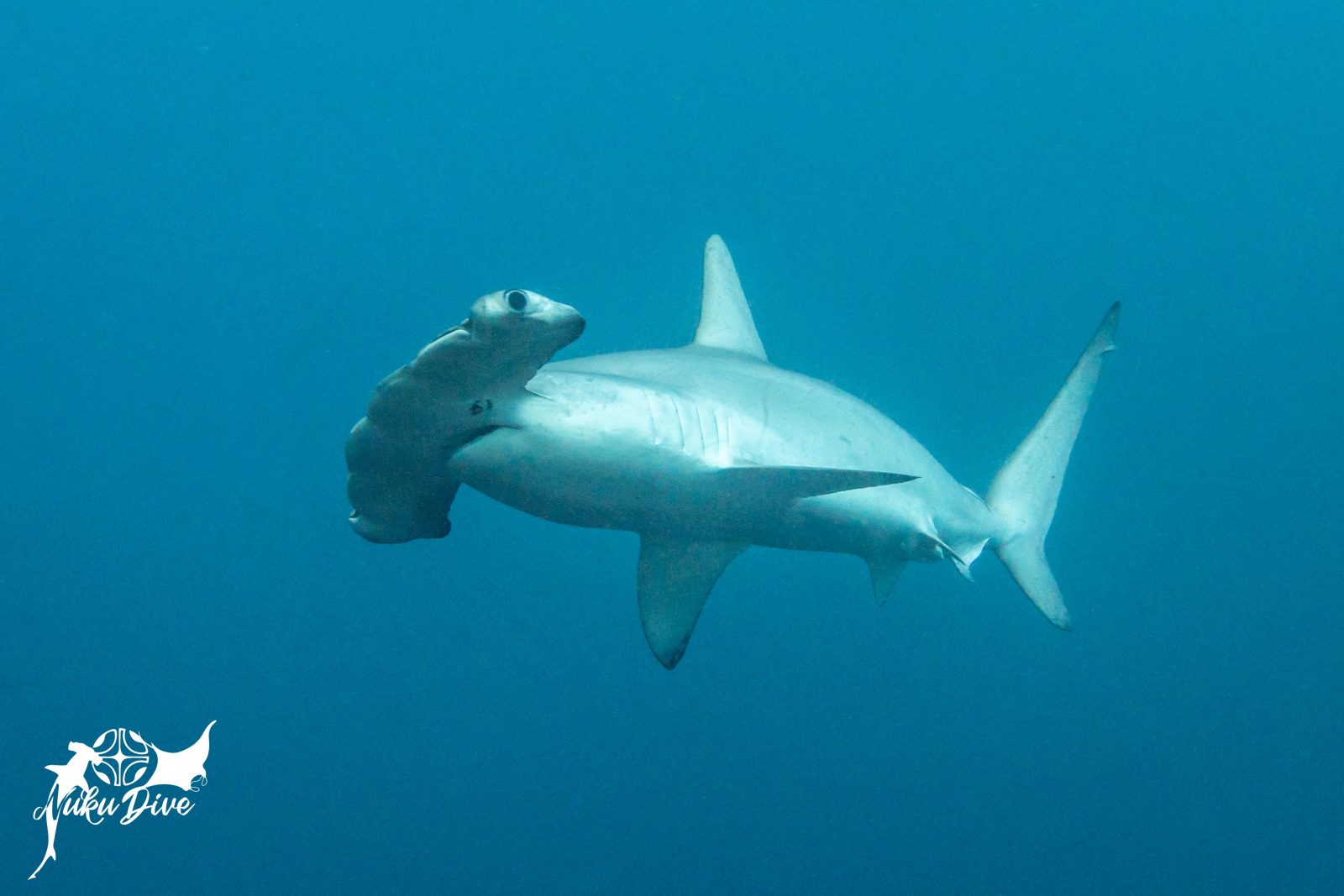
The marine life of the Marquesas is very different from that of the rest of French Polynesia. Among the most iconic species are the reef manta ray and the scalloped hammerhead shark (Sphyrna lewini). Around cleaning stations, these fascinating animals can be observed without going very deep. Manta rays are present in the archipelago’s waters all year round, while hammerhead gatherings are most noticeable between April and October. To preserve these privileged encounters, Nuku-Dive follows an approach protocol that respects the animals’ natural behaviour.
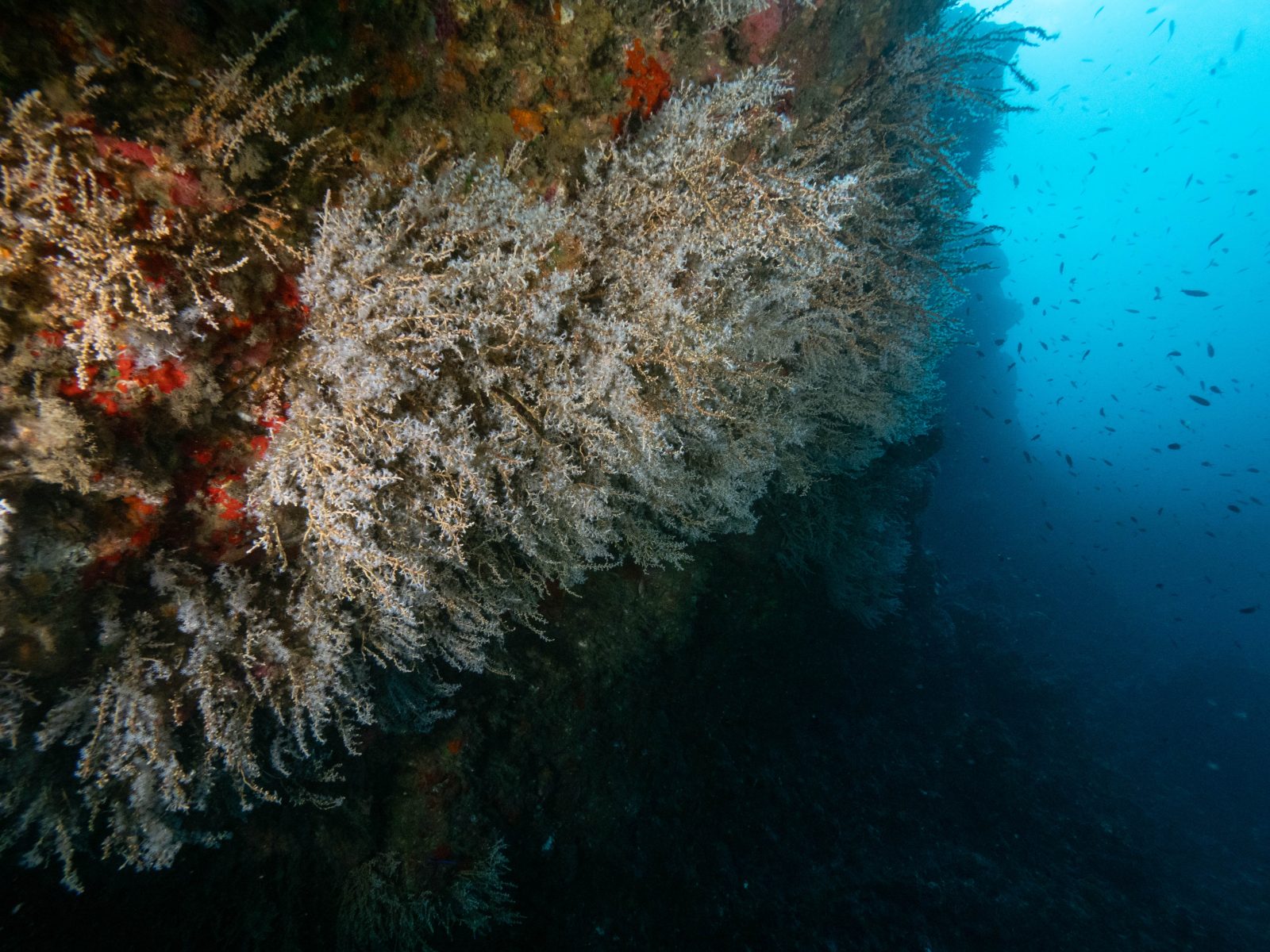
The various ecosystems are also home to abundant marine life: trevallies, tuna, barracudas, drummers, fusiliers, morays, pipefish, lobsters, shrimps, octopus, nudibranchs and many other species.
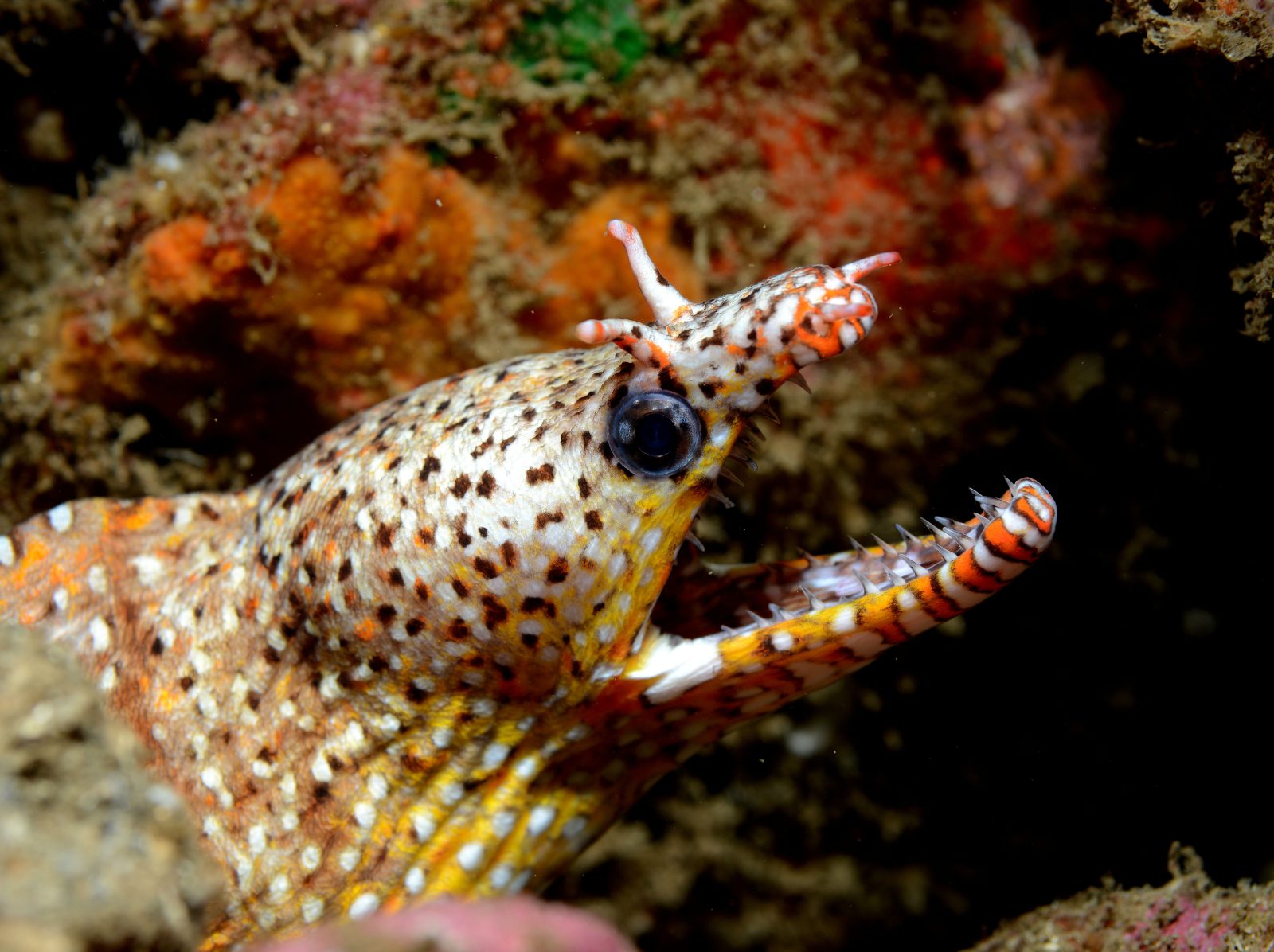
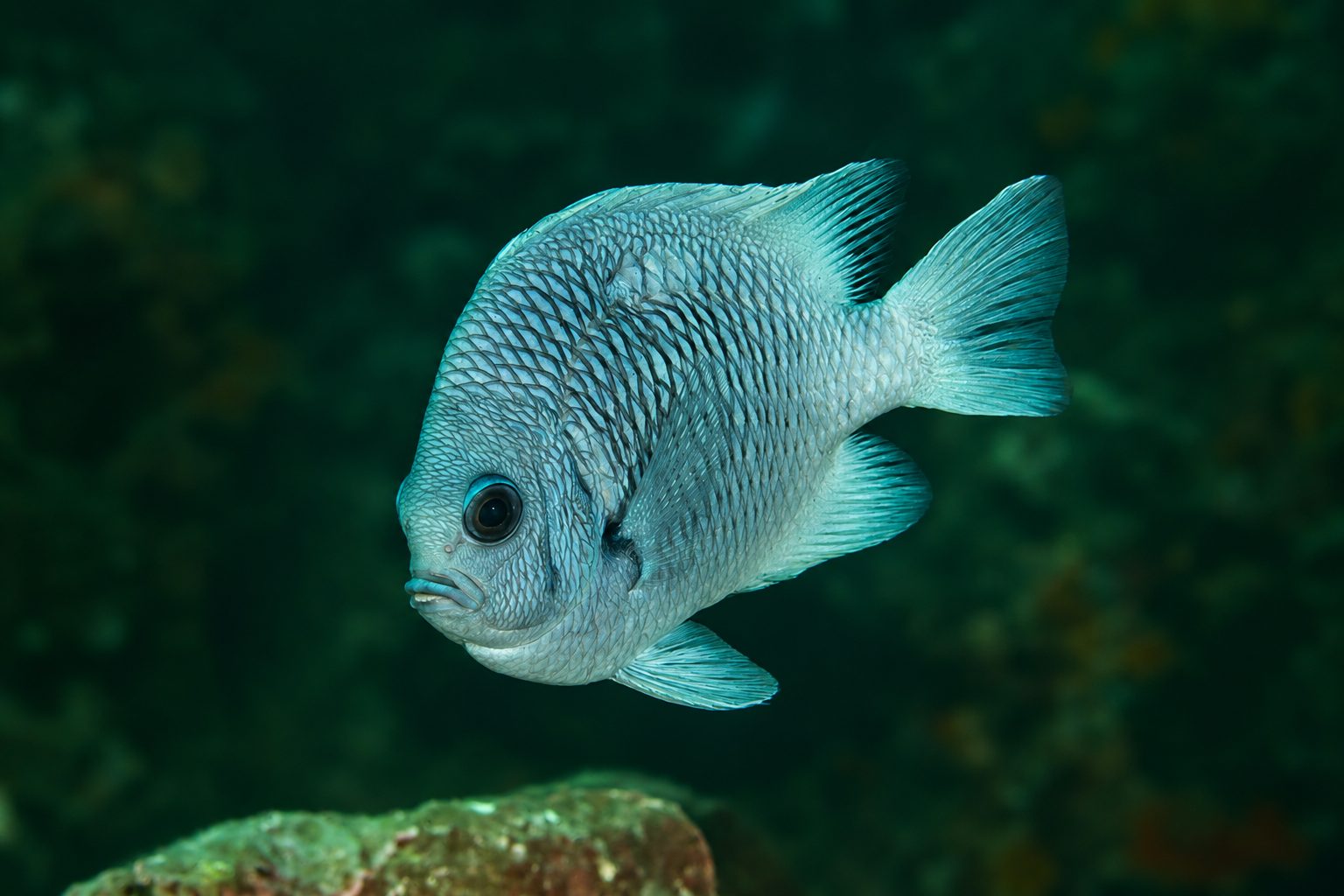
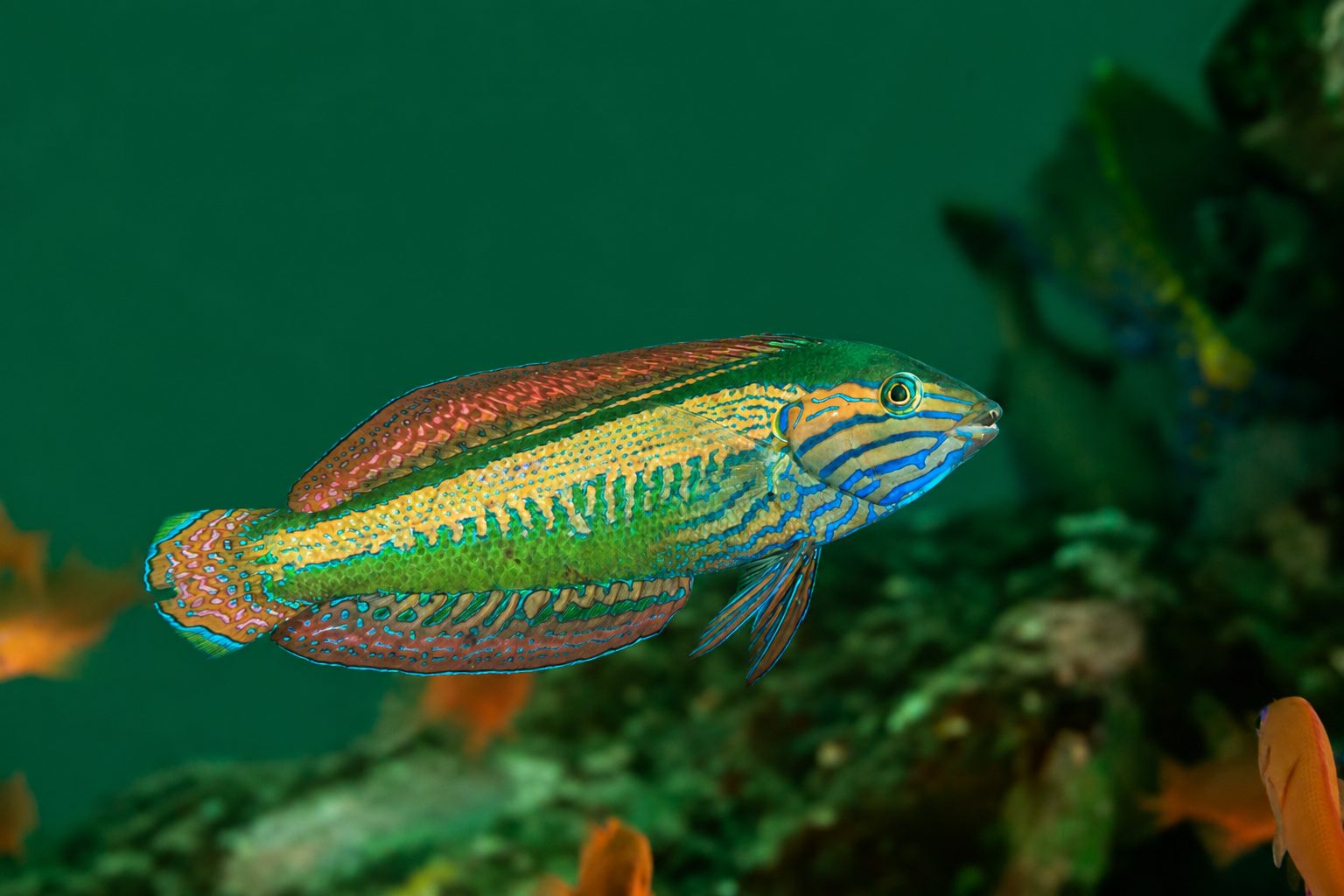
The geographical isolation of the archipelago has given rise to many endemic species, including the dragon moray, Strasburg’s damselfish, the marbled ray and Hewett’s coris, witnesses to the unique identity of Marquesan waters.
Every trip, a thrill
Full of fish and unexpected encounters, diving in the Marquesas appeals to underwater photographers as much as to fans of large pelagics or lovers of small critters.
During the boat rides, Nuku Hiva’s spectacular cliffs and wild valleys are a constant show. Every trip has its share of thrills, whether admiring the ballet of manta rays, coming across a pod of spinner dolphins or witnessing the impressive tuna hunts in Marquesan waters.